January 2006
By RON CSILLAG
Catholic church’s bloody campaigns of enforced orthodoxy were bad policy but make great TV
Four-part series pulls few punches exploring brutal efforts to eradicate heresy, writes Ron Csillag
The word itself is cringe-inducing: Inquisition. Put a historical and religious spin on it, and it yields a reign of terror that lasted for more than 600 years, a campaign by the Roman Catholic Church of enforced orthodoxy that let loose persecution, dread and death until the thousands accused of heresy.
Those lucky enough to have escaped being burned or bled alive were nonetheless ruled through imprisonment and confiscation of property. Whole populations were driven from their homelands in the name of purity and piety.
The Inquisition — not limited to Spain as many might believe — was horrible and cruel and startlingly un-Christian. It earned the Catholic Church a black eye that is remembered to this day.
It also makes for great television.
Starting Wednesday and continuing over three successive Wednesdays at 10 p.m., Vision TV will air Secret Files of the Inquisition, a rich but disturbing look at one of the darkest chapters in Christian history.
Produced and directed by Emmy Award-winning Canadian filmmaker David Rabinovitch, the $3 million international project pulls few punches. Each episode notes prominently, for example, that the Vatican did not open its archives on the Holy Office of the Inquisition until 1998, and the archives are still incomplete.
Rabionovitch, who has three decades of television and film work under his belt in Canada and the United States, conceives the production of these stories as a cautionary tale.
“If you did a public survey and asked people, ‘What does the word Inquisition mean to you?’ you’re generally going to get two responses: The Spanish Inquisition, or something to do with a Monty Python sketch, or Mel Brooks’ History of the World Part I,” he says. “It began in the same relative state of ignorance.”
But once work got underway, he realized there “wasn’t just one monolithic Inquisition, but various inquisitions at various points in history. That’s why the series has four episodes.”
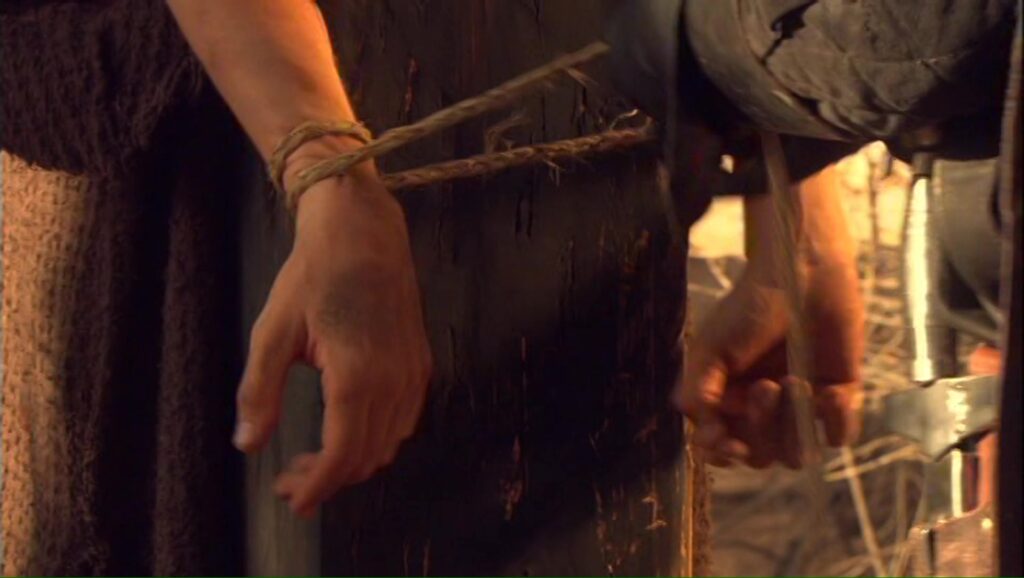
Using detailed re-enactment, archival transcripts and costumes, actors’ voices narrate actual historical transcripts, describing life in 13th-century southern France, and a group of wandering ascetics called the Cathars.
The renegade Christian sect, accused of heresy that the Church sought to eliminate, was targeted beginning in 1233, when Pope Gregory IX charged the Dominican order of priests with the task of eradicating the Cathar heresy.
The inquisitors were ruthless. By 1308, the few Cathars left were driven underground, and the entire village of Montaillou was effectively taken prisoner as interrogations, suspicions and fear followed, with the condemned, who were spared death, forced to wear yellow crosses of shame.
Part two takes us to Spain, where the Inquisition targeted those who had already converted to Christianity but who were accused of being clandestine “Judaizers.”
Attacks from Catholic zealots led nearly half of Spanish Jews to convert
Until the late 14th century, Christians, Jews and Muslims lived in harmony in the Iberian peninsula, but beginning in 1391, attacks from Catholic zealots led nearly half of Spanish Jews to convert in the name of self-preservation. These “conversos” prospered, creating resentment.
In 1478, the monarchs Ferdinand and Isabella, who dreamed of a unified Spain, persuaded Pope Sixtus IV to authorize the Spanish Inquisition.
The Grand Inquisitor was the Dominican friar Tomas de Torquemada, the first of several in that position. Jews as such were not the targets of the Inquisition — its legal mandate was to root out heresy among Christians — but conversos were suspected of secretly practising Judaism.
A network of spies and informants sprang up. Accusers could remain anonymous. Torture was sanctioned, with the rack and other devices used to extract confessions. The punishment was the public burning called the auto-da-fé (“act of faith”), a fiery foretaste of hell designed to “strike the fear of God into all who witness it.”
Thousands died in the first five years; by one estimate, 15 per cent of Spain’s population had been affected by the Inquisition.
In 1492, the Spanish monarchs sanctioned the Edict of Expulsion, forcing Jews to convert or leave Spain within three months — an act of ethnic cleansing.
The series also examines later inquisitions in Italy, including the persecution of thinkers such as Galileo and the Church’s suppression of ideas during the Reformation.
While the series acknowledges that relatively few people may have been executed compared to the number investigated, the use of torture and fear left a deep mark on history.
The final episode explores the decline of the Inquisition and its eventual end in the 19th century.
The lesson the series offers for today: the importance of resisting intolerance, even when it is justified in the name of faith or authority.
Ron Csillag is a Toronto writer who specializes in religion.