
February 2006
By BRIAN BETHUNE
A docudrama based on secret Vatican files shows people literally arguing for their lives
“Nobody expects the Spanish Inquisition!” Monty Python famously joked in 1970, and we all laughed, probably quite unaware that only a century earlier the Holy Office of the Inquisition into Heretical Depravity—to give the Roman Catholic Church’s enforcer its proper, ominous name—was still hard at work. For 600 years the Inquisition was a real and dangerous presence in the lives of millions and, in the minds of those the Church persecuted as enemies of true faith—Christian dissenters, secular freethinkers and Jews—the ultimate icon of religious tyranny. Even now its name conjures up nightmares of Pit and Pendulum-style torture and victims burning at the stake. So potent is the image that it’s never been easy to separate the Inquisition of myth from the Inquisition of history. But the Vatican’s 1998 decision to open up its files—made by Pope Benedict XVI when he was still the cardinal in charge of the Inquisition’s archives—finally allowed historians to make a start.
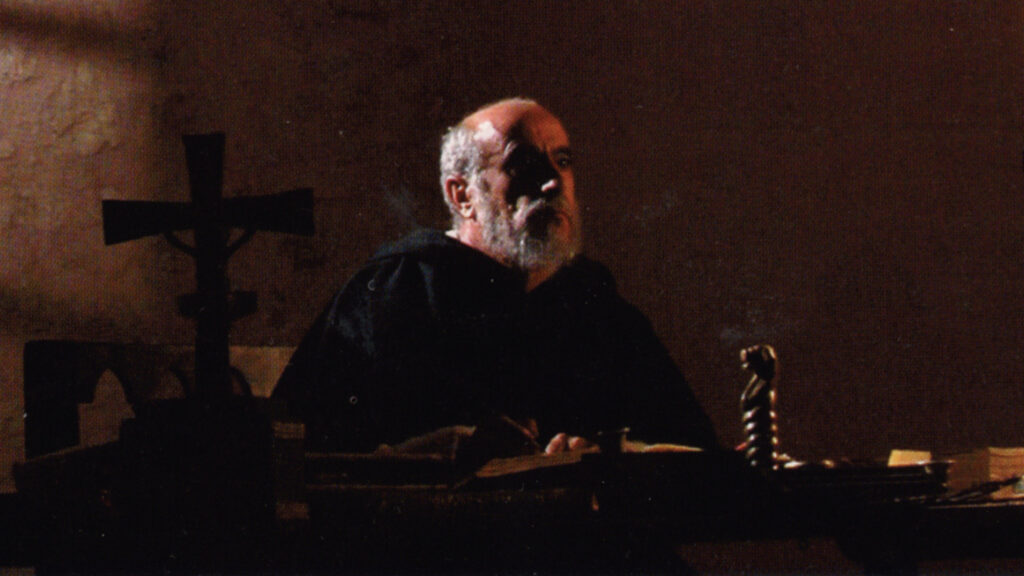
And not just historians. The Vatican announcement also caught the imagination of American filmmaker David Rabinovitch. “My first thought was, ‘There’s got to be some stories there,’ ” he told Maclean’s. And so it proved. His four-part docudrama, Secret Files of the Inquisition, which began airing on Vision TV on Feb. 1, brings to life chilling incidents through the actual words—spoken by an all-Canadian vocal cast, including narrator Colm Feore—a kaleidoscope of victims, people literally arguing for their lives.
During the 15th- and 16th-century Inquisition in Spain, which was primarily motivated by a profound anti-Semitism, the main targets were conversos—Jews who had converted to Christianity in recent years, often at the point of a sword, or their descendants. Spanish Catholics suspected most, if not all, of them of still being secret Jews. (Ironically, professing Jews were not directly subject to the Inquisition’s tender mercies: its legal mandate was to root out heresy among Christians.) So the interrogators obsessed over the telltale minutiae of everyday life, particularly food. “There was salt pork on the table, but she ate none,” was the damning testimony of one witness about a converso. There were endless questions about recipe ingredients, so much so that one historian has created a medieval cookbook solely from inquisitorial records.
Scholars tend to doubt the plausibility of most accusations of secret Judaism, but sometimes the charges were true. Rabinovitch’s story centres on a young woman, baptized Juana but called Cinca by her family members who had for decades lived a dangerous double existence, trying to preserve their lives and their ancestral faith. Betrayed by neighbours, Cinca remained defiant to the end, her last words to her torturers among the most stirring in the records: “You are the ones who are lost. We are the fortunate ones. And don’t call me Juana—my name is Cinca.”
In the French Pyrenean village of Montaillou, inquisitors turned up a soap opera-worthy web of heresy, local politics and sexual jealousy in 1308, most of it swirling about Pierre Clergue, village priest, heretic sympathizer and local Casanova. Clergue’s conquests included the local noblewoman, wooed through his unorthodox theology: he assured her that God had forgiven their sexual trespasses even before they happened. It is impossible to tell, in fact, if Clergue’s heretical beliefs were genuine or simply aids to seduction. A French historian once wrote that it seemed every woman in the village had slept with the priest, wanted to sleep with him, or had deluded him. (The last was a common medieval lover’s intimacy, one with million-year-old roots—consider chimpanzee foreplay—that modern hygiene has thankfully abolished.) In the end, only one villager went to the stake out of more than 100 interrogated; many others were imprisoned or sentenced to wear yellow crosses on their clothing, the reconciled heretic’s equivalent of a Jew’s yellow star.
Rabinovitch argues that his rich source material proves that “evil loves to document itself.” But that’s not really true. Far more often, evil likes to hide its tracks, as any historian who has tried to find a paper trail linking Adolf Hitler to Auschwitz will attest. Those meticulous notes were taken by men convinced of their own righteousness. What those records do show is the fate of individuals caught up in great historical storms: most are accidental and half-hearted participants, but all of them have to decide whether to bend with the wind or stand and die for their beliefs.