January 2006
By TIM ARSENAULT
The four-part docudrama series, Secret Files of the Inquisition, filmed on location in Italy, France and Spain, debuts Wednesday at 11 p.m. on Vision TV. The hook of the show is that the source material is somewhat unique. The Vatican briefly opened its archives on the subject in 1998 to scholars. The people depicted in the series and the quotations attributed to them are taken from the original transcripts.
NOBODY EXPECTS a four-hour exploration of the Inquisition to be compelling viewing. But they would be mistaken if the series in question were Secret Files of the Inquisition. The international co-production gets its North American television premiere Wednesday at 11 p.m. on Vision. The series runs for four weeks with repeats of episodes on Thursdays at midnight.
The $3-million dramatic documentary is a big deal for the relatively low-profile specialty channel. The dramatic segments were filmed in Spain, France and Italy and director, producer and co-writer David Rabinovitch oversaw the enterprise. Canadian actor Colm Feore, familiar to television viewers for his memorable turn in the title role of the first Trudeau mini-series, does the narration.
The hook of Secret Files of the Inquisition is that the source material is somewhat unique. The Vatican briefly opened its archives on the subject in 1998 to scholars. The people depicted in the series and the quotations attributed to them are taken from the original transcripts.
Secret Files of the Inquisition, even at four hours in length, can only scratch the surface of what amounts to an immense topic.
The establishment of the tribunals is credited to Pope Gregory IX in 1233 as a means of battling heresy by the Roman Catholic Church. The Inquisition would last, in various forms and countries, for some 600 years.
The first episode, titled Root Out Heretics, is set in Southern France where an obscure — at least to me — group of dissident Christians known as Cathars is depicted as gently helping people get by in the early 13th century. Their actions are, however, seen as a threat by Pope Gregory IX and the Dominican Order is instructed to do whatever it takes to stamp out Catharism.
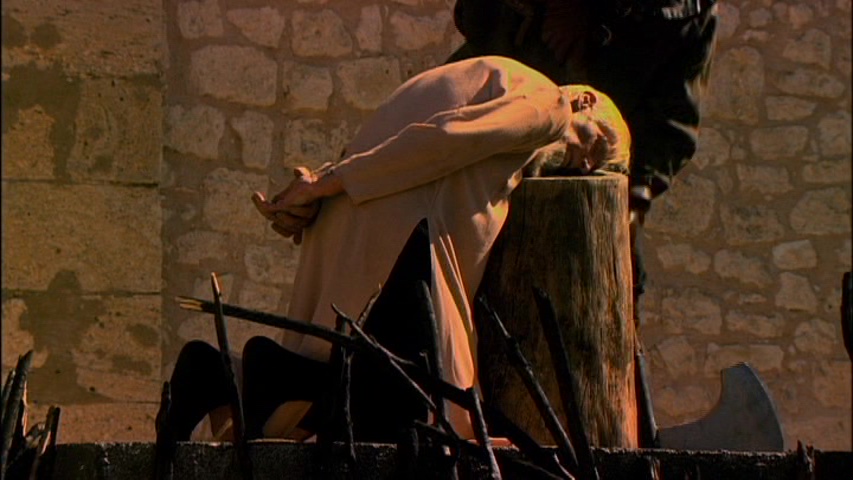
The Inquisition, at least as it pertains to this time and place, is shown to be swift and decisive with a speedy progression from arrest to interrogation to torture, if required. The punishments meted out by the authorities ranged from being ordered to wear a yellow cross of shame to confinement in shackles with only bread and water for sustenance to burning at the stake.
The second episode, The Tears of Spain, follows the Inquisition to the late 15th century. Up to this point, what is now Spain had been a model of civility where Christians, Muslims and Jews lived fruitfully together and enjoyed each other’s customs. But the ruling combo of Ferdinand and Isabella aspired to unite the land under their Catholic faith.
The monarchy ran its own Inquisition there, shutting out Rome, and also brought torture to a whole new level. Viewers will learn the source of the expression “putting one’s feet to the fire” and see a range of devious contraptions designed to capitalize on neighbours turning in neighbours. Without exaggeration, the methods these guys perfected make Guantanamo Bay seem like Club Med.
The dramatic portions are fleshed out by comments from several Inquisition scholars whose books would no doubt provide further information for anyone interested in going deeper into the topic.