January 26, 2006
By SHELDON KIRSHNER
Convert or die!
This heart-rending admonition rang out and reverberated as a wave of religious intolerance washed over Spain in the 14th century.
This development changed the course of Jewish history and is the subject of Secret Files of the Inquisition, an illuminating four-part Canadian series by David Rabinovitch due to start on Wednesday, Feb. 1, at 10 p.m. on Vision TV.
As we learn in the opening episode, the Inquisition actually began in 1233 in southern France, when Pope Gregory IX charged the Dominican order with wiping out heresy among a dissident Christian sect known as Catharism.
This crackdown, enforced by ambitious priests, was unleashed because the church was basically unwilling to bend to the needs of the people and adapt to changing times.
The Inquisition spread to Spain in 1391, when radical Catholic priests demanded that Spanish Jews convert to Christianity or suffer the consequences.
By some estimates, half of the Jews embraced Christianity in the name of self-preservation. These New Christians, the Conversos, prospered and some became members of the Spanish elite.
But soon their world came crashing down. Old Christians, jealous of their success in trade, commerce and the professions, railed against them. Catholic zealots sharply questioned their commitment to Christianity and accused them of secretly practising Judaism.
It is indeed true that more than a few of the Conversos made a show of being Christians in public while hewing to Judaism in private. Branded as “Judaizers,” they were accused of subverting the Catholic faith.
In 1478, King Ferdinand and Queen Isabella, the monarchs who dreamed of consolidating the principalities of the Iberian peninsula into a pure, unified Catholic state, persuaded Pope Sixtus IV to agree to the Spanish Inquisition.
Notorious for its cruel practices, the Inquisition was under the leadership of an ardent Converso, the Dominican priest Tomas de Torquemada. He aimed his wrath exclusively at fellow Conversos who had strayed from Catholic dogma.
During the first five years of the Inquisition, thousands of Conversos were burned at the stake and tortured. By one estimate, 15 per cent of Spain’s population was affected by the Inquisition.
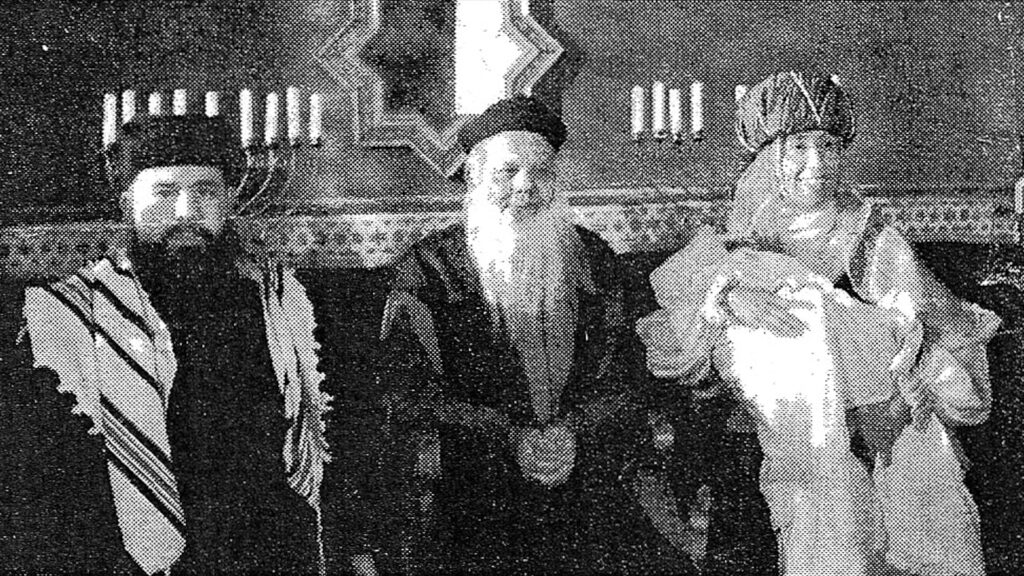
Among the Conversos to be persecuted were Jaime de Montessa, a respected judge, and Cinca Cacavi, a young wife and mother. Through dramatizations, Rabinovitch illustrates their dilemmas and fears.
Such incidents prompted Conversos to launch life-saving appeals to Ferdinand and Isabella, as well as the pope, but their desperate efforts fell on deaf ears.
In 1492, Torquemada took the Inquisition to its logical conclusion, convincing the king and queen to expunge Jews from Spain in what would be a process of ethnic cleansing.
Jews were given an ultimatum: convert to Christianity or leave Spain within three months. One third emigrated and one third converted. The rest dithered, paying a fierce price for their irresolution.
Judging by the first two episodes, narrated by the Canadian actor Colm Feore, Secret Files of the Inquisition is compelling TV, a window into a terrible era.